


Many homeowners are shocked to discover that the natural geology of the regions they live in heavily influences their water supply at home. In Colorado, water often has higher levels of calcium, magnesium, and other dissolved minerals. These create what’s called hard water, a condition that affects many households across the state.
Hard water impacts everything from plumbing systems to daily tasks such as laundry or washing dishes. Over time, mineral accumulation can even result in maintenance issues for pipes and appliances. It can even affect how cleaning products and soaps perform. Due to these challenges, many homeowners choose to install water softeners in Colorado to protect their homes and improve water quality.
What Hard Water Is and How It Forms
Hard water contains elevated concentrations of dissolved minerals; calcium and magnesium are the most common examples. These minerals enter water supplies naturally as groundwater flows through underground soil layers and rock formations.
As water moves through chalk, limestone, and other rock formations rich in minerals, it dissolves small amounts of various materials. Once water gets to private wells or municipal treatment systems, it often has measurable mineral content that impacts its hardness level.
Hardness is usually measured in either milligrams per liter or grains per gallon. Higher values reflect more mineral content. In turn, that means greater potential for mineral-related issues in household plumbing systems.
While these minerals are okay to drink, they can result in various practical problems in residential homes. Over time, things can get worse.
Why Hard Water Is So Common in Colorado
The geology of the state is a significant factor in the presence of hard water in Colorado homes. Mineral-rich rock formations are common across the local landscape, and these easily release magnesium and calcium into groundwater sources.
When snowmelt and precipitation filter through the ground, water absorbs these minerals before it enters reservoirs, rivers, and underground aquifers. Many of these minerals can remain dissolved in the water supply even after municipal water treatment.
The Rocky Mountain region is especially known for mineral-rich terrain. As water travels through these geological layers, it picks up dissolved minerals, naturally increasing hardness levels. These natural conditions make hard water a common reality for many homes in the Centennial State.
How Mineral Buildup Affects Plumbing Systems
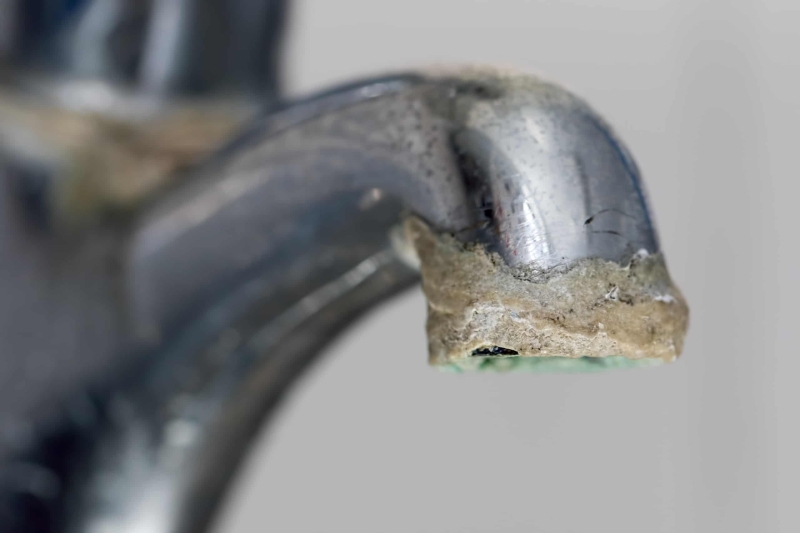
One of the most noticeable effects of hard water is mineral deposits forming inside plumbing systems. Over time, water evaporates, leaving minerals behind that accumulate along the inner surfaces of fixtures, pipes, and water-using appliances. This mineral accumulation is usually known as hard water buildup. These deposits can get thicker and gradually restrict water flow through fixtures and pipes.
Reduced pipe diameter can make plumbing systems less efficient and lower water pressure. Valves, showerheads, and faucets might become partially blocked. These deposits are not overnight formations but accumulate slowly with years of routine water use, eventually resulting in noticeable performance issues.
Signs of Hard Water in the Home
Many homeowners don’t know that mineral-rich water is impacting their households until they start noticing the visible signs on glassware, appliances, and plumbing fixtures. These symptoms often indicate underlying Colorado hard water problems affecting daily water usage.
Chalky, white residue is a common indicator when it forms on sinks, showerheads, or faucets. This residue is what remains after mineral-heavy water evaporates from surfaces.
Soap and detergent performance can also suffer. Hard water often prevents soap from dissolving completely, leaving dishes cloudy after washing or soap scum on bathroom surfaces.
Laundry might feel less clean or more rough when it’s washed in mineral-rich water. In some circumstances, homeowners might notice that their hair is hard to manage or their skin feels dry after they shower or bathe.
The Impact on Appliances and Water Heaters
Hard water minerals can drastically impact the efficiency and lifespan of household appliances. Dishwashers, washing machines, and water heaters are especially vulnerable because they rely on heating elements and a consistent water supply.
Mineral deposits have a tendency to build up inside water heaters, and heated water accelerates the formation of scale on the heating components. This scale layer reduces heat transfer efficiency, forcing the system to work harder to maintain the desired water temperature.
Consequently, water heaters might consume more energy than before while also providing less effective performance. Over time, this additional strain can shorten the unit’s lifespan.
Washing machines and dishwashers might also develop scale deposits that interfere with proper operation or clog internal parts. These complications can result in more frequent repairs and even premature appliance replacement.
How Water Softeners Improve Household Water Quality
A water softener removes hardness-causing minerals from a home’s water supply before it gets into household plumbing systems. The ion exchange process replaces calcium and magnesium ions with potassium or sodium ions. Water passes through a tank with resin beds that capture hardness minerals while releasing softening ions, resulting in water with considerably fewer dissolved minerals.
By addressing mineral content at the source with a whole-home water softener, you can have treated water flow to all your appliances, faucets, showers, and water heaters with reduced hard content. This can prevent many of the side effects and undesired consequences of living in a region known for hard water.
Benefits of Installing a Water Softener
Improved water quality is the first advantage of installing a water-softening system, but there are more. Many homeowners notice immediate improvements in how their water interacts with detergents, soap, and cleaning products. Soap usually lathers more easily in softened water; handwashing and showers become more effective. Plumbing protection in Colorado is another important benefit for preventing scale accumulation and extending the lifespan of plumbing components. Fewer repair issues and lower energy consumption are two more benefits of water softener installation.
Protecting Plumbing and Appliances for the Long Term
Preventing mineral accumulation from entering your home’s pipes is usually simpler and more cost-efficient than repairing damage done by long-term scale deposits. Water-softening systems are a proactive solution that limits scale formation, preserving the reliability and efficiency of plumbing systems, fixtures, and appliances.
Improving Everyday Water Use in Colorado Homes
Recognizing the warning signs of mineral-heavy water starts the process of improving water quality in your home. Reduced water pressure, poor soap performance, and white residue on fixtures are all indicators that water hardness levels might be impacting household water use. By addressing hardness at the source, you can enjoy better-performing appliances, cleaner fixtures, and a more efficient overall plumbing system.
Many homeowners find that installing a water-softening system provides a dependable solution that improves water quality and protects appliances and plumbing from long-term mineral damage. We serve residents of Longmont and the surrounding Colorado communities with reliable plumbing services. These include leak detection, backflow prevention, sewer line repair, clog removal, fixture and appliance repair, and more.
Contact Mountain Valley Plumbing for professional solutions to manage your home’s hard water problems.